Switch it on and your shop has an address the same day. It sells the products you already keep, and every order arrives as a sales order for you to confirm.
There is no second catalogue to keep in step. The shop sells the products you already keep — you choose which ones are published.
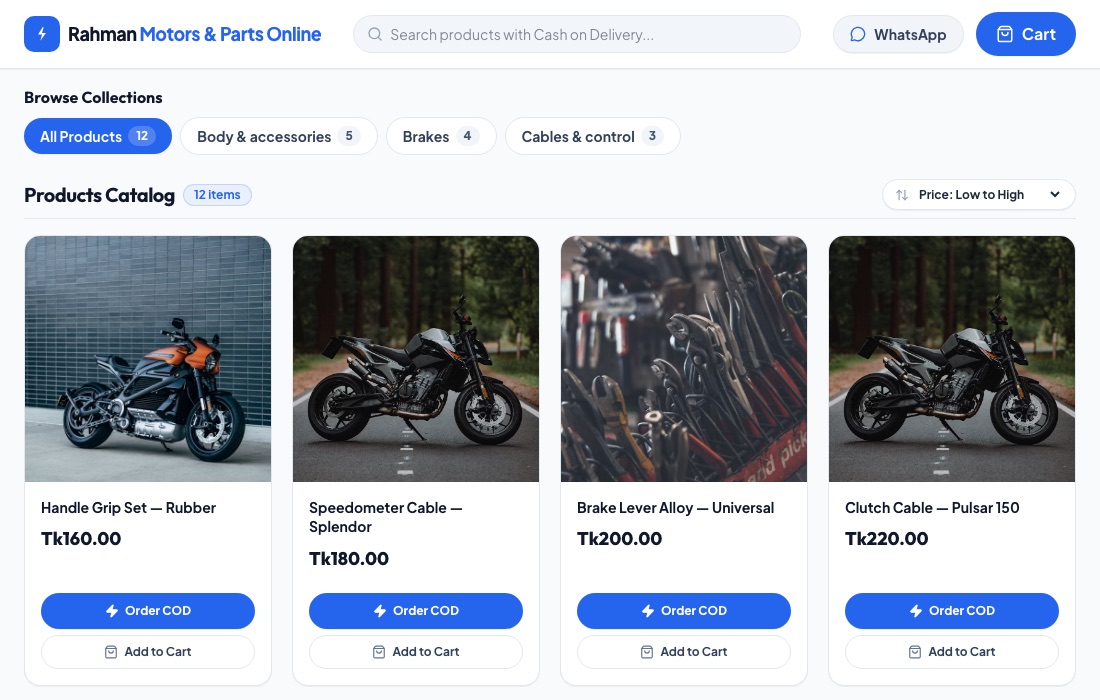
Your shop has an address the moment you switch it on — no domain to buy, no DNS to set up, no certificate to renew. Use your own domain later and the link follows.
Not when you get round to confirming it. So the site cannot sell the last one twice, and the shelf and the shop never disagree.
Your customer orders without an account and follows it in their own words — confirmed, packed, out for delivery — while you work in yours.
It arrives where your other sales already live, and walks the same path to your books.
No account, no password. A name, a phone number and an address is the whole of it.
Straight away, before you have seen it — so the next shopper cannot buy the same last one.
It is a sales order like any other. Confirming moves no stock a second time, because the shop already took it.
Posted to your ledger with everything else you sold that day. Nobody re-types a line.
Cancelling a shop order puts its goods back on sale the moment you do it — the same way it took them.
Order confirmed, processing, out for delivery, delivered. Your warehouse keeps its own words; your customer reads theirs.
A company has one online shop, not one per outlet. Behind that single shop your branches keep their own stock, their own till and their own profit — and the figures still add up to the company.
Stock is counted per branch, so an order comes off the shelf of the branch that fills it — never quietly off another branch's.
Each branch runs its own registers and shifts, and prints its own address on the slip.
A profit and loss for each branch, and the branches plus anything unallocated add up to the company — with no spreadsheet in between.
Send stock from one branch to another and both ends see the transfer. A third branch does not.
Assign someone to a shop and that is what they work in. Assign them to none and they see everything.
One shop front, one set of books. The shop, the tills, the stock and the ledger are one system — not a website bolted to an accounts package.
Free while you are small, and the shop is a module you can add or drop from your next bill.